Bookish builds E-Paper writing and learning systems that make it possible for schools to replace student computers with distraction-free devices.
Why Bookish?
The company began with the premise that attention, not access, is the scarce resource. Our work is to build the technical stack that lets people read, think, and write on E-Paper without bringing the distractions of a general-purpose computer with them.
For schools, Bookish turns a quiet E-Paper device into a complete educational workspace. For individual writers, Bookish turns the e-paper device into a serious long-form writing system. Both products begin from the same conviction that technology should support your work and not compete with it.
book·ish
/ˈbʊk.ɪʃ/ adjective
Given to reading; devoted to books and the pursuit of learning.
She was bookish in the best way: curious, careful, and always reaching for the next thing worth knowing.
Of or relating to a life shaped by books and literary culture.
He credited his bookish upbringing with giving him the habit of attention that served him the rest of his life.
A note from the founder
Hello, my name is Joe. I’m obsessed with alternative tech solutions like E-Paper that can help us reclaim our peace and focus. I founded Bookish because I kept saying to myself, ‘I wish I had an e-paper device when I was a student.’
That led to the question, ‘What would it take to replace students’ computers with E-Paper devices?’
As it happens, it takes an entire technical stack to make that possible. With a great team beside me and lots of work, it is now possible to give students distraction-free E-Paper devices instead of devices engineered for distraction while allowing schools to keep their current set of learning systems and tools.
Thank you for considering being part of this mission.
— Joe Rooney, Founder and CEO
Jan Davidsz de Heem · Still Life with Books and a Violin · 1628
Where we started
You should not have to choose between pedagogy and paperwork
Learning requires attention. We believe that a learning environment should help students read whole texts, work hard problems by hand, and articulate and defend their thoughts.
Today, almost every device made for a classroom is optimized for engagement, entertainment, and gamification, and works against attention and focus.
From a school’s perspective, it’s difficult to opt out of one-to-one devices for reasons of scale, efficiency, access to state-of-the-art tools, and the administrative burden on staff and teachers.
Schools should not have to choose between protecting student attention and using state-of-the-art learning tools. Bookish preserves the conditions for deep learning while giving schools the practical advantages of digital coursework, submission, feedback, and administration.
Thomas Eakins · The Writing Master · 1882
Serious writing
Serious education requires serious writing
Writing is not an accessory to education. It is one of the principal ways people learn to think.
An educational workspace cannot stop at reading and handwriting. Students need to type, draft, revise, format, cite, and finish serious work on a tool that can create footnotes and endnotes and apply the academic formatting required by MLA, APA, and Chicago.
Bookish built the first full-suite academic document editor native to E-Paper devices.
These writing capabilities are not only ideal for students, but also for writers, academics, and professionals. That grew into Bookish for Writers.
“The task of the modern educator is not to cut down jungles, but to irrigate deserts.”
Bookish for schools and writers
Bookish for Schools
Bookish gives schools the ability to replace student computers with distraction-free E-Paper devices. It integrates with a school’s learning management system and assessment tools while providing mobile device management (MDM), FERPA-compliant infrastructure, device configuration, fulfillment, and an E-Paper-native editor built for academic writing.
Teachers keep the learning tools and workflows they already use, while students read, write, and submit assignments without the distractions of a browser, app store, notifications, social media, or AI chatbots.
While we were building Bookish for Schools, individuals kept asking for the device and writing system for their own personal use. So we launched Bookish for Writers: the same writing system without the school integrations, classroom workflows, or fleet-management capabilities.
Bookish for Writers extends the Supernote Manta to be optimized for long-form writing with a keyboard. It combines the Bookish document editor with academic formatting, near-instant latency while typing (unusual for e-paper), high-fidelity exporting to DOCX and PDF, and other optimizations for serious long-form writing.
Writers can draft an academic paper, work on a novel, or compose a Substack post on a device built for focus, then export their work cleanly and finish wherever they choose.
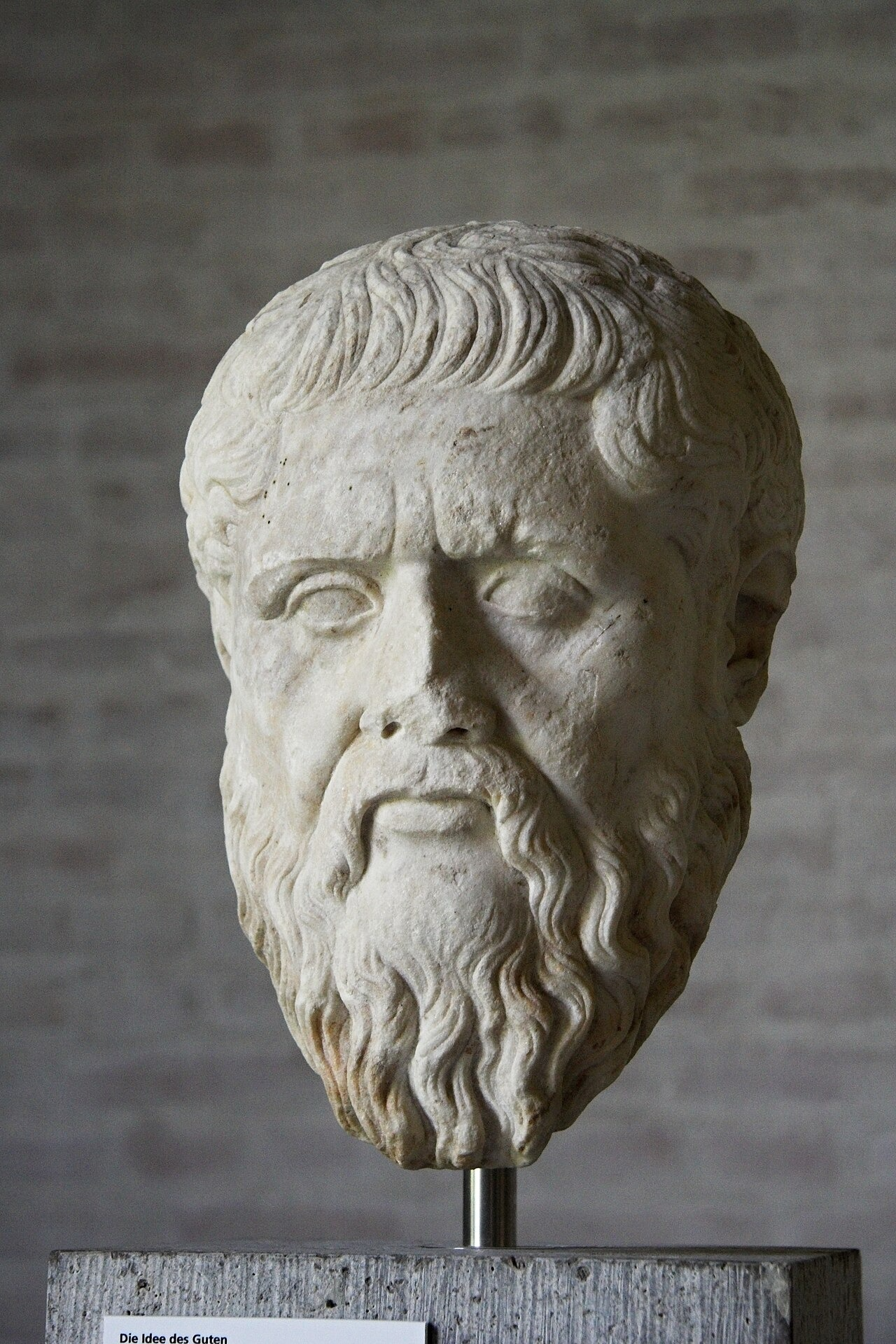
Plato’s Academy · Roman mosaic, Pompeii · c. 1st century BC
Our mission
Our North Star
Bookish exists to restore the conditions required for deep learning and serious writing. We build tools that support formation and human craft rather than replacing them, and we want to make E-Paper capable of serious academic and creative work without turning it into another general-purpose computer.
For schools, this means helping give children more of their day back from screens and restoring the conditions for deep learning. For writers, it means creating a place where sustained thought and a person’s own voice can develop without interruption.
We do not reject technology. We build on it wisely, so it gets out of the way and leaves people free to think, create, and remain open to wonder.
Raphael · The School of Athens (detail) · 1509–11
What we believe
Learning and writing are acts of formation
We have never had more access to information, and yet it has never been easier to finish work without thinking.
What is missing is not information, but negative space. What is needed is to sit with a hard problem long enough to understand it, time to work through a question and find the words that articulate it. This critical thinking process is slow and difficult, and yet these are the conditions for learning, creativity, judgment, and original work.
Education is not only information but also formation. Teaching is not merely the delivery of material but relationship and inspiration for students. Writing is not merely the production of words but the discovery of what one believes. Education is a transformational journey that shapes the person doing the work.
The aim is larger than information transfer. Education should cultivate a person’s capacity to recognize what is true, choose what is good, and attend to what is beautiful.
Technology can make it easier to produce content and complete work, but it cannot form the student to decide what is true, what is worth saying, or what kind of person someone should become. Those questions require attention, judgment, relationship, and responsibility.
“As Plato wrote, the deepest and most important things are learned only after much time and effort, by engaging in discussion with others, ‘striking upon’ ideas and experiences together like flint until the spark of understanding is kindled within us.”
“We’re investing in you because we believe you are giving kids their childhood back, away from screens, and restoring deep learning.”
The principles behind our work
01
Focus is the scarce resource
Focused attention is not simply a productivity technique. It is the condition that makes deep reading, careful thought, learning, and serious writing possible.
02
Protect the struggle
A student must wrestle with difficult reading, writing, ideas, and problems in order to learn. A writer must remain with an argument, image, or sentence long enough to discover what it is trying to become. The work happens in the wrestling, not when an answer arrives immediately.
03
Quiet by design
Tools should remove distraction and make space for deep work, discovery, and formation. Wonder and insight emerge when unnecessary noise fades and attention is allowed to rest. When focus competes with engagement, focus wins.
04
Human craft cannot be replaced
The best learning happens under the guidance of a real teacher who knows the student, or a parent who knows the child. The best writing carries the judgment, voice, and responsibility of the person whose name appears on it. Everything we build should serve human judgment and craft. Nothing we build should replace them.
05
The person is more than the output
No score captures the whole of who a child is or what the child might become. No engagement metric, word count, or measure of output captures the full value of serious work. We care about the person being formed through the work, not merely the amount produced.
06
Customers first
We obsess over the people who use what we build. We listen closely, make honest claims, and prioritize taking care of our current customers over acquiring new ones. We would rather earn deeper trust with the schools and writers already using Bookish than grow faster than we can serve them well.
What we value
Quiet and concentrationovergamification and entertainment
Teacher craft and relationshipoverscale and efficiency
Discovery and depthovercontent consumption
Understandingoverengagement metrics
Student and writer thinkingoverAI-generated answers
The struggle of learning and writingoverperfection
Clarityoverspeed
Tools that disappearovermore features
While there is value in many of the things on the right, we value the things on the left more.
Edgar Melville Ward · The Coppersmith · c. 1898
“Our youth must be helped, and not hindered, in their journey towards maturity and true responsibility… Access to data — however extensive — must not be confused with intelligence… In the end, authentic wisdom has more to do with recognizing the true meaning of life, than with the availability of data.”